A dead outlet or a GFCI that keeps tripping is annoying. Sometimes it is also a warning. This guide explains what a GFCI does, what you can safely check yourself, and when the problem belongs with a licensed electrician. We wrote it for homeowners in Dublin and nearby towns like Pleasanton, San Ramon, Livermore and Danville.
What a GFCI outlet does
GFCI stands for ground fault circuit interrupter. It watches the electricity going out to a device and coming back. If a small amount goes missing, for example through water or a person, it shuts power off in a fraction of a second. That quick shutoff is what protects you from a serious shock.
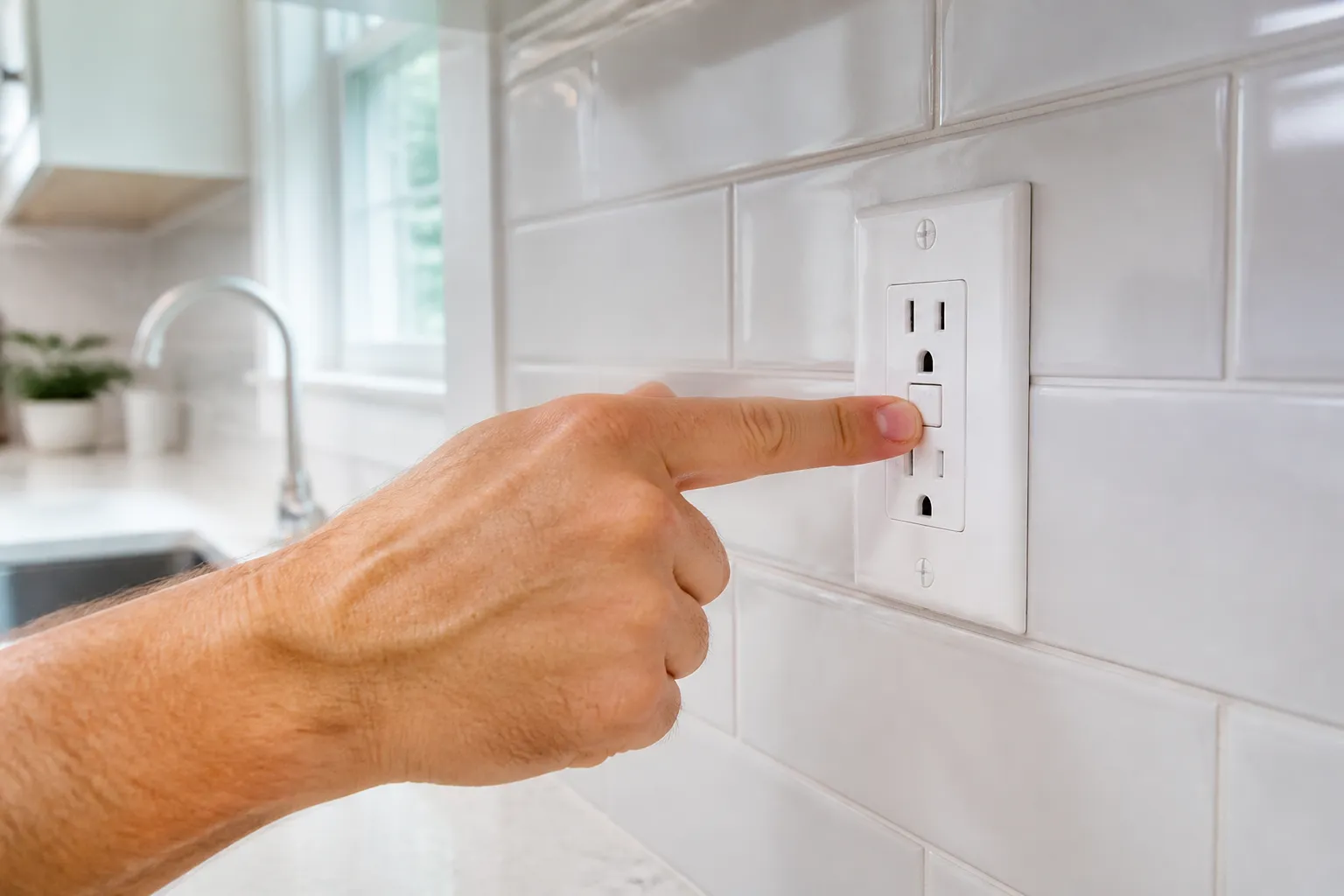
You will usually find GFCI outlets where water is nearby: kitchens, bathrooms, garages, laundry areas, basements and outdoor outlets. They have two small buttons in the middle, marked TEST and RESET.
One more thing to know: a single GFCI can protect other outlets down the same line. If an outlet in the garage is dead, the GFCI that controls it may be in a bathroom or on the outside of the house.
Simple checks you can safely make
These steps do not involve opening anything up. They are fine for most homeowners.
1. Test the device first
Plug the lamp, charger or appliance into a different outlet. If it works there, the outlet is the problem. If it does not, the device or its cord may be the cause.
2. Unplug everything on the circuit
Remove what is plugged into the dead outlet and the ones nearby. A faulty appliance or cord is one of the most common reasons a GFCI trips.
3. Press RESET on the GFCI
Press the RESET button firmly. If it clicks and stays in, power should come back. Check nearby GFCI outlets too, including ones in the kitchen, bathrooms, garage and outside, because the tripped one may not be the one you are looking at.
4. Use the TEST button
Press TEST. The outlet should cut power and the RESET button should pop out. Press RESET to restore power. If TEST does nothing, or RESET will not pop out, the internal protection has likely failed and the outlet should be replaced.
5. Look at the breaker panel
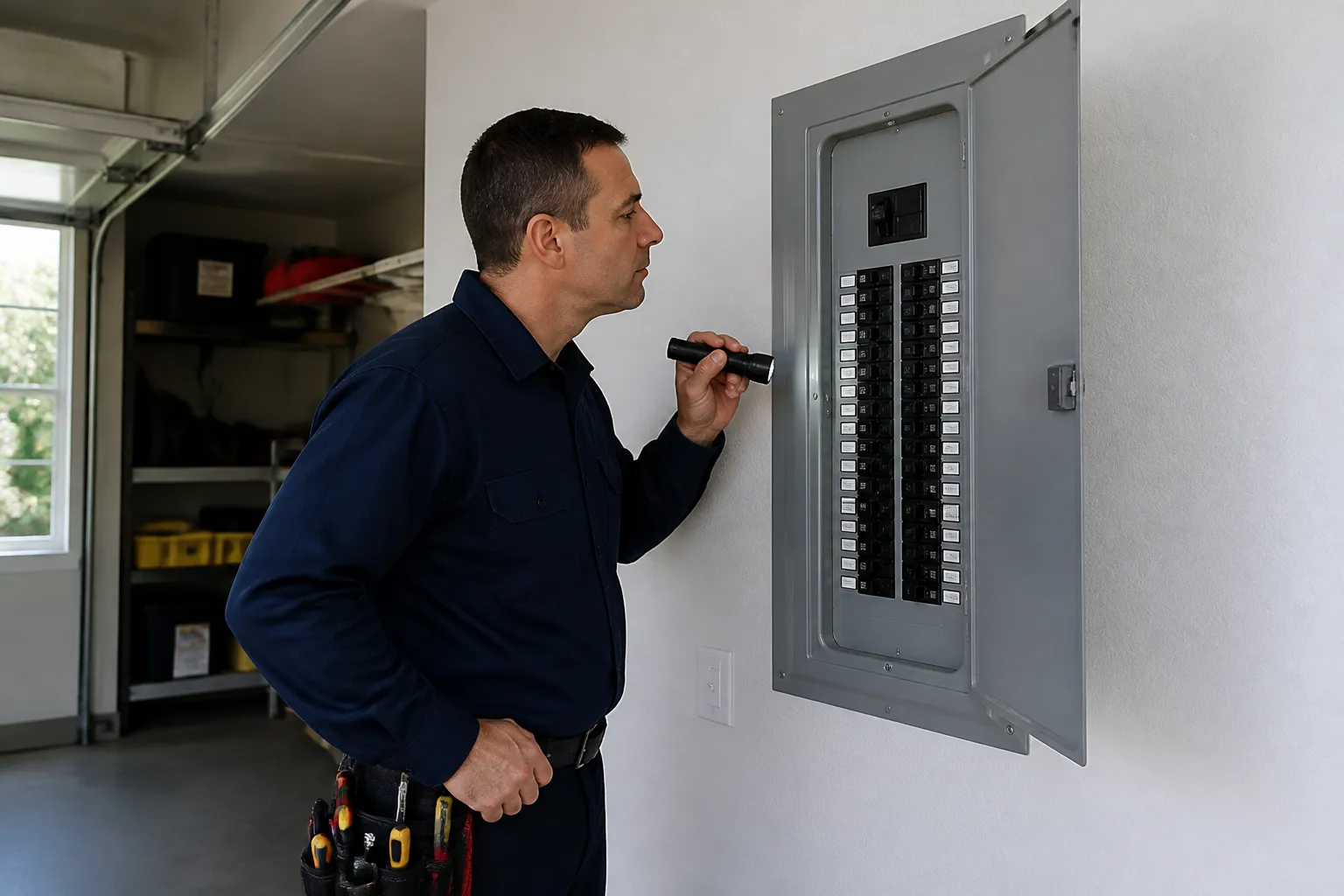
Check whether a breaker is tripped. It may sit in a middle position instead of fully off. Switch it fully off, then back on, one time. If it trips again, stop and do not keep resetting it.
Signs that mean stop and call a pro
Some problems are not worth troubleshooting on your own. Turn off the circuit at the panel and call an electrician if you notice any of these:
- Heat, or a wall plate that feels warm or hot
- Scorch marks, brown or black discoloration, or melted plastic
- A burning or fishy smell near an outlet
- Sparking, buzzing, sizzling or crackling sounds
- Water inside or around an outlet
- A tingle or shock when touching an outlet or a plugged-in device
- A cracked, loose or damaged outlet
If you see smoke or flames, leave the house and call 911 first.
Do not remove cover plates, tighten wires or work inside the panel unless you are qualified. Loose connections are a common cause of heat and arcing, and they are not obvious from the outside.
GFCI problems that need an electrician
A GFCI that trips once after a storm or a bad appliance is not unusual. These patterns point to something deeper:
- It will not reset. The outlet may be worn out, or there may be a fault on the line.
- It trips with nothing plugged in. That can mean moisture in a box, a wiring fault inside the wall, or a failed unit.
- It trips again and again. Several devices can add up small leakage, and motors and some electronics leak a little by design. Hidden wiring faults are also possible.
- The TEST button does not work. The outlet is no longer giving shock protection.
- It only trips in damp weather. Outdoor, bathroom and basement boxes can take on moisture.
- It was wired incorrectly. Mistakes at the GFCI itself, such as line and load wires swapped, can cause odd behavior.
An electrician can find the cause, then repair or replace the outlet. Our GFCI and outlet repair page explains how we approach these calls.
A dead outlet with the breaker on
Many homeowners find an outlet that has no power even though the breaker looks fine. Common causes include a tripped GFCI somewhere else, a switched outlet controlled by a wall switch, a loose wire connection, or a worn receptacle. The first three checks above cover the easy ones.
If the outlet is still dead after you have checked the GFCIs, the breaker, the wall switches and the device, it is time to call. A loose or broken connection behind the wall is not a DIY fix.
Things to watch for in older Dublin homes
Dublin has a mix of older tract homes and newer neighborhoods. Homes from the 1960s and 1970s may still have original wiring and outlets. Some have two-prong outlets with no ground. Some homes built in roughly the mid 1960s to early 1970s used aluminum branch wiring in places, which needs special connectors and careful handling. If you are not sure what is in your walls, an electrician can check before you swap any outlets.
Replacing two-prong outlets with three-prong ones is not safe unless there is a real ground or the proper protection is used. This is one more reason to have a pro look at older outlets.
When you need a new GFCI or more outlets
Sometimes repair is not the answer. If a GFCI is at the end of its life, if your kitchen, bath, garage or outdoor areas lack protection, or if you are remodeling, you may need new outlets. See our GFCI and outlet installation service for that kind of work.
If a breaker trips often, or if several outlets lose power at once, the issue may be the circuit and not the outlet. An overloaded or worn breaker may need to be replaced. Our circuit breaker installation page covers that work.
What affects the cost of a repair
We will not guess at a price here, because every house is different. These are the things that usually decide it:
- Whether the fix is a simple outlet swap or a wiring fault inside a wall
- How many outlets or circuits are involved
- How easy the wiring is to reach
- Whether older wiring needs to be corrected or updated
- Whether a breaker or panel part needs replacement
A written estimate before work begins helps you compare options with confidence.
How to prevent GFCI and outlet trouble
- Press TEST and RESET on your GFCIs every month or so.
- Do not use damaged cords or overloaded power strips.
- Keep outdoor outlet covers closed and in good shape.
- Do not run space heaters or other high-draw appliances on the same outlet as other items.
- Replace outlets that feel loose, grip plugs poorly or look cracked.
Quick answers
Is it safe to keep resetting a GFCI that trips?
Resetting once or twice after an obvious cause, such as a wet appliance, is fine. If it keeps tripping, something is wrong and it needs to be checked.
Can I replace a GFCI myself?
Wiring errors are easy to make, and a GFCI that is wired wrong may not protect you. If you are not experienced, hire a licensed electrician.
Is a warm outlet normal?
A plug can feel slightly warm under a heavy load, but a hot or discolored outlet is not normal. Turn off the circuit and have it inspected.
Need help with an outlet or GFCI in Dublin?
If an outlet is hot, a GFCI will not stay reset, or you are just not sure what is behind the wall, the Electrician Dublin team can take a look. Request an Estimate and tell us what you are seeing.